ServicesExams & Cleanings
Kids' Exams & Cleanings in Boston
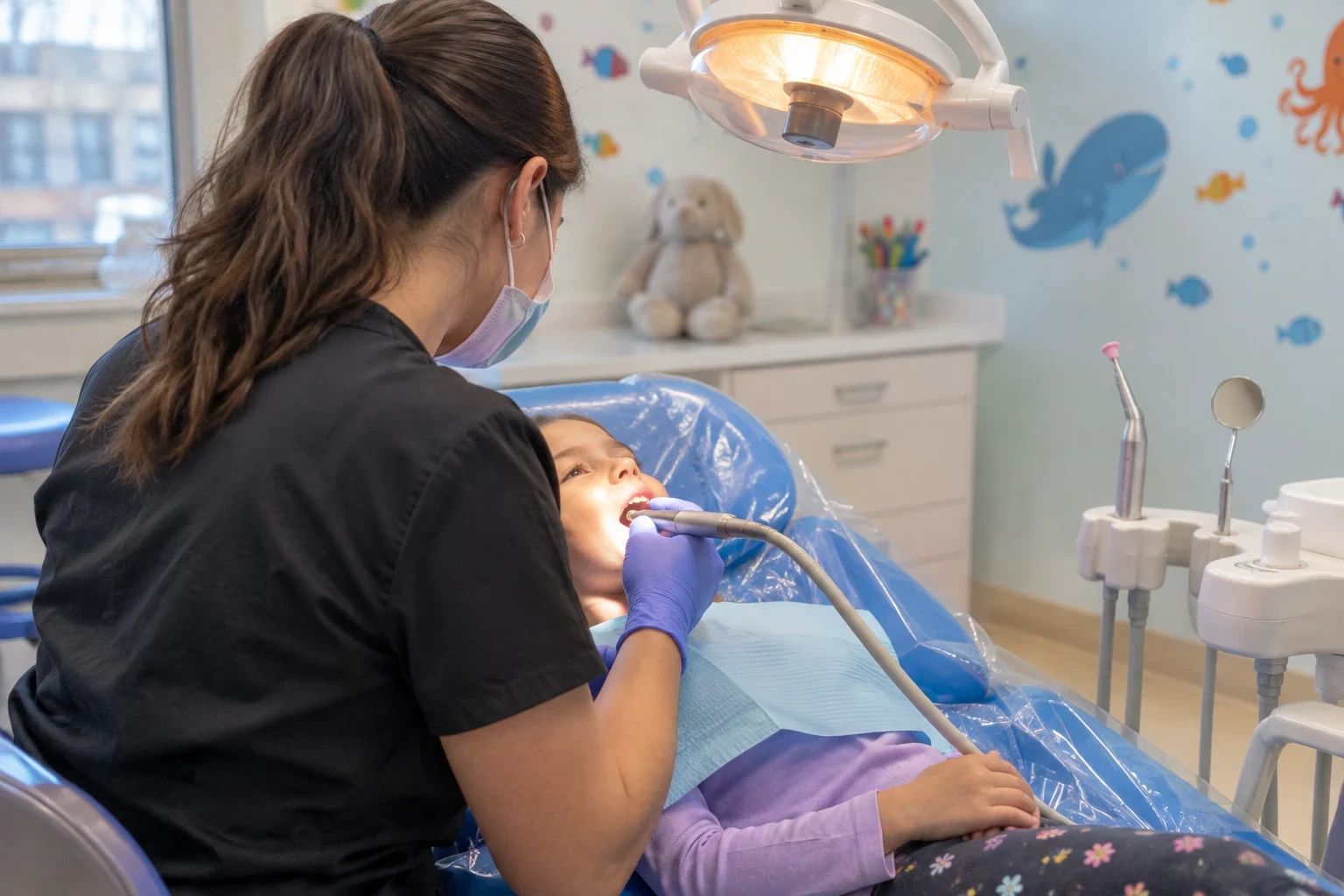
A calm, unhurried checkup and cleaning sized for your child, from a baby's first tooth to a teen's last molars. We use sterile instruments, take x-rays only when they answer a real question, and explain everything we see in plain words.
What a Checkup Does for Your Child
Most cavities in kids start quietly. A soft white spot near the gumline or a sticky groove on a back molar rarely hurts at first, so parents often have no way to know it is there. A regular exam and cleaning finds these early, while the fix is small or can be handled with prevention alone.
Our approach puts safety ahead of speed. Instruments come out of sealed, sterilized pouches. Gloves and masks are fresh for every child. X-rays are taken only when your child's age, history or something we see calls for them, and we use a protective collar and apron each time.
Visits also build habits. A child who has sat in the chair many times without trouble is far more comfortable if a filling or sealant is ever needed later.
What Every Visit Includes
- 01
Health history review
We check in on medications, allergies and anything new since we last saw your child. Knowing this keeps each step safe, including later choices about numbing agents or fluoride.
- 02
Careful exam of teeth and gums
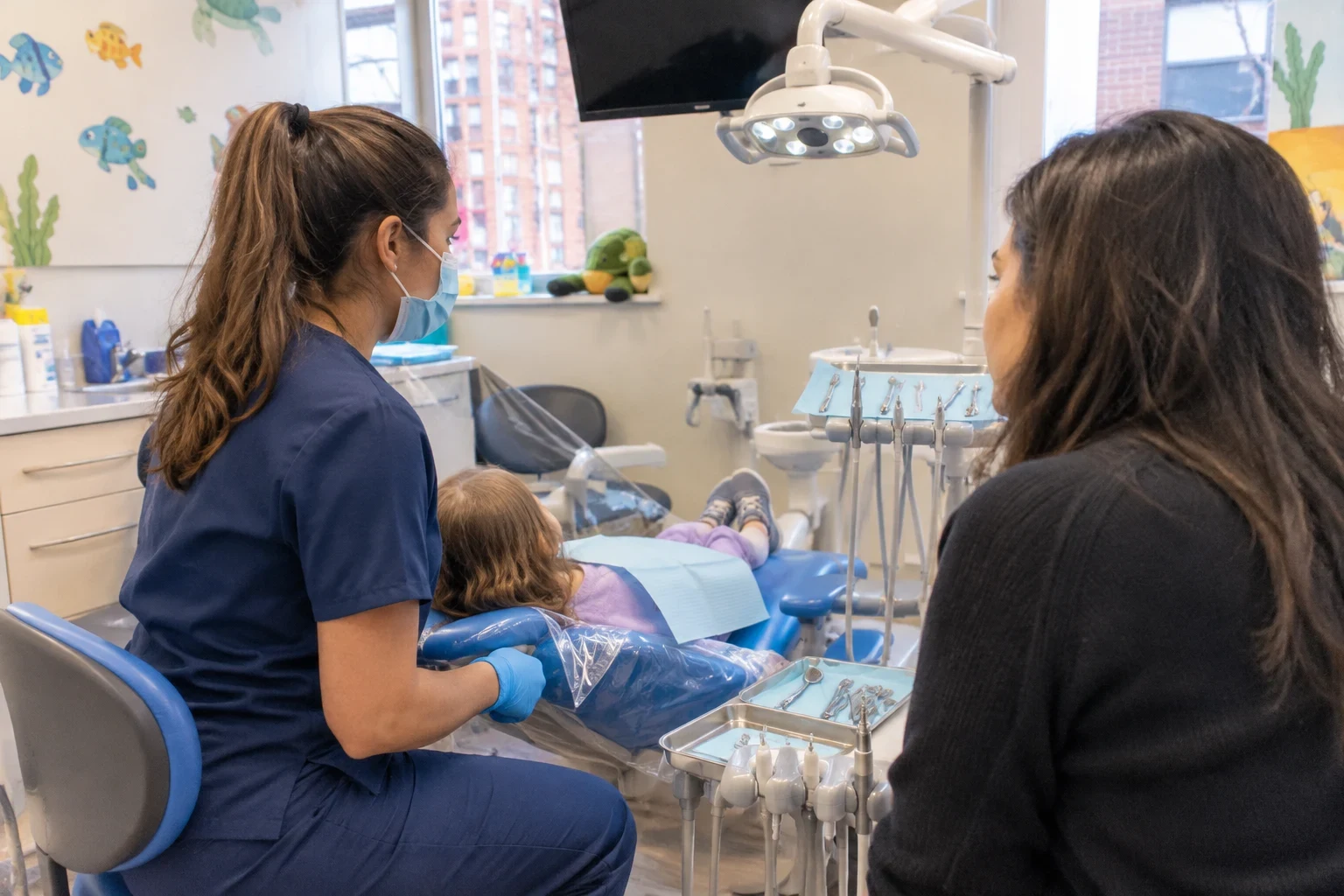
We look at every tooth plus the gums, tongue, cheeks and bite. Babies and toddlers are often examined knee to knee, lying back with their head in your lap so you stay in view.
- 03
Gentle cleaning and polish
Small, kid-sized instruments lift away plaque and tartar, followed by a polish with a mild paste. We ease up around tender areas and stop for a break whenever your child asks.
- 04
X-rays only when needed
Images are not part of every visit. When they are, your child wears a thyroid collar and lead apron, and we take only the views required to see between teeth or follow adult teeth coming in.
- 05
Fluoride matched to risk
A fast coat of fluoride varnish after the cleaning protects many kids' enamel. Whether we suggest it depends on your child's cavity risk; our Fluoride Treatment page has more detail.
- 06
A clear talk with parents
Before you head out, we show you what we saw and what we recommend, from brushing pointers to whether Sealants are worth considering. The decision on next steps is yours, with no pressure.
Questions about Exams & Cleanings?
Call(617) 766-0034Signs It Is Time to Book a Checkup
A first tooth or first birthday
We like to see babies around their first birthday, or no more than six months after that first tooth shows. Early visits let us spot risks and teach you how to clean very small teeth.
Six months or more since the last visit
Left alone, plaque hardens into tartar that a toothbrush cannot clear. Cleanings twice a year stop it from collecting along the gumline.
White, brown or chalky spots
Marks like these can signal decay in its earliest form. Found now, they may improve with fluoride and better brushing rather than needing a filling.
Bleeding or puffy gums
Gums that bleed during brushing usually mean plaque is sitting at the gumline. A cleaning plus a few changes to the daily routine often calms them fast.
Sensitivity or a complaint of soreness
Kids seldom explain tooth pain well. If your child chews on one side only or flinches at cold drinks, an exam can track down why.
How the Visit Goes
- 1
Arrive and get comfortable
Our team welcomes your child personally and lets them take in the room before anything starts. Little ones might hold a hand mirror or help count their own teeth first.
- 2
Tell, show, then do
We say what each tool is called, let your child touch it with a fingertip, and then put it to use. Following that order removes surprises and helps anxious kids stay relaxed.
- 3
Exam, cleaning and any x-rays
We clean and polish, check each tooth, and take images only when there is a reason to. You can stay right next to the chair the whole time.
- 4
Review and next visit
We go over our findings with you, answer anything on your mind and book the next checkup, typically about six months later.
What Shapes the Cost of a Checkup
Preventive visits are usually the most predictable part of your child's care, and many insurance plans treat them generously. We explain what is planned before we start, and nothing is added without your okay. On payment, our office takes three credit cards: MasterCard, Visa and Discover. Most insurance plans are accepted too, and families who prefer to spread costs over time can use CareCredit Patient Payment Plan.
- Your insurance plan
- Coverage for exams, cleanings and fluoride varies from plan to plan, as do the limits on how many visits are covered each year. We are glad to help you make sense of what your plan includes.
- Whether images are taken
- A visit without x-rays costs less than one with them. We base the imaging schedule on your child's risk level instead of taking pictures at every appointment.
- Extra preventive steps
- Fluoride varnish, or sealants on molars that have just come in, add to the bill for that day. Both often prevent much larger treatment later.
- First visit or follow-up
- A new patient appointment takes longer, with a fuller exam and health history, so the total can differ from a routine return visit.
Parents' Questions About Exams and Cleanings
How many checkups a year does my child need?
For most kids, a visit twice a year works well. A child with a history of several cavities, or one in braces, may do better with more frequent visits. If we suggest a different schedule, we will explain our reasons.
Are dental x-rays safe for kids?
The radiation from dental x-rays is very low, and we keep it lower still by taking images only when they will tell us something we need. Each child wears a thyroid collar and apron. Ask us at any point why a certain image is needed and we will walk you through it.
May I stay in the room?
Of course. Parents can be present from start to finish. Babies and toddlers in particular settle better with you nearby, often resting back in your lap during the exam.
What if my child is frightened or refuses to open up?
Plenty of kids feel this way, and we never push a cleaning through. We take it slower, explain and show each step, and sometimes finish part of the visit and pick up the rest next time. For strong anxiety or special needs, our Sedation Dentistry page describes other options.
What happens if you find a cavity?
We point it out and go over your options. Very early spots can sometimes be monitored and treated with fluoride. When a filling is the better choice, we book it as its own visit, giving you time to prepare your child.
Get Your Child on Our Schedule
Registering your child as a new patient happens over a single phone call. Tell us their age and anything on your mind, and we will plan a calm first visit around what you share.