ServicesSedation Dentistry
Sedation Dentistry for Kids in Boston
When a child is very anxious, very young or needs several teeth treated, sedation can make the visit calmer and safer. We review health history first, use the lightest level that does the job, and watch breathing and comfort until your child is alert and ready to leave.
What sedation does, and when it makes sense
Sedation helps a child stay relaxed and still while we work. It is not a shortcut. Most kids do well with a gentle approach, a clear explanation and a parent nearby, and we try those first. Sedation becomes the right call when fear, age or the amount of treatment would make a normal visit stressful or unsafe.
A child who is squirming or crying in the chair is at more risk of a slip of an instrument, and is more likely to dread the next visit. A calmer child lets us finish fillings or crowns carefully in one sitting, with a clean, well-sealed result instead of rushed work spread over several difficult appointments.
Safety sets the pace. We match the level of sedation to your child's age, weight and health, give you written instructions before the day, and keep a team member watching your child the entire time.
What a sedation visit includes
Health history and airway check
Before we recommend anything, we go over medications, allergies, asthma, recent colds and snoring. We also look at tonsil size and breathing. If something gives us pause, we wait or adjust the plan.
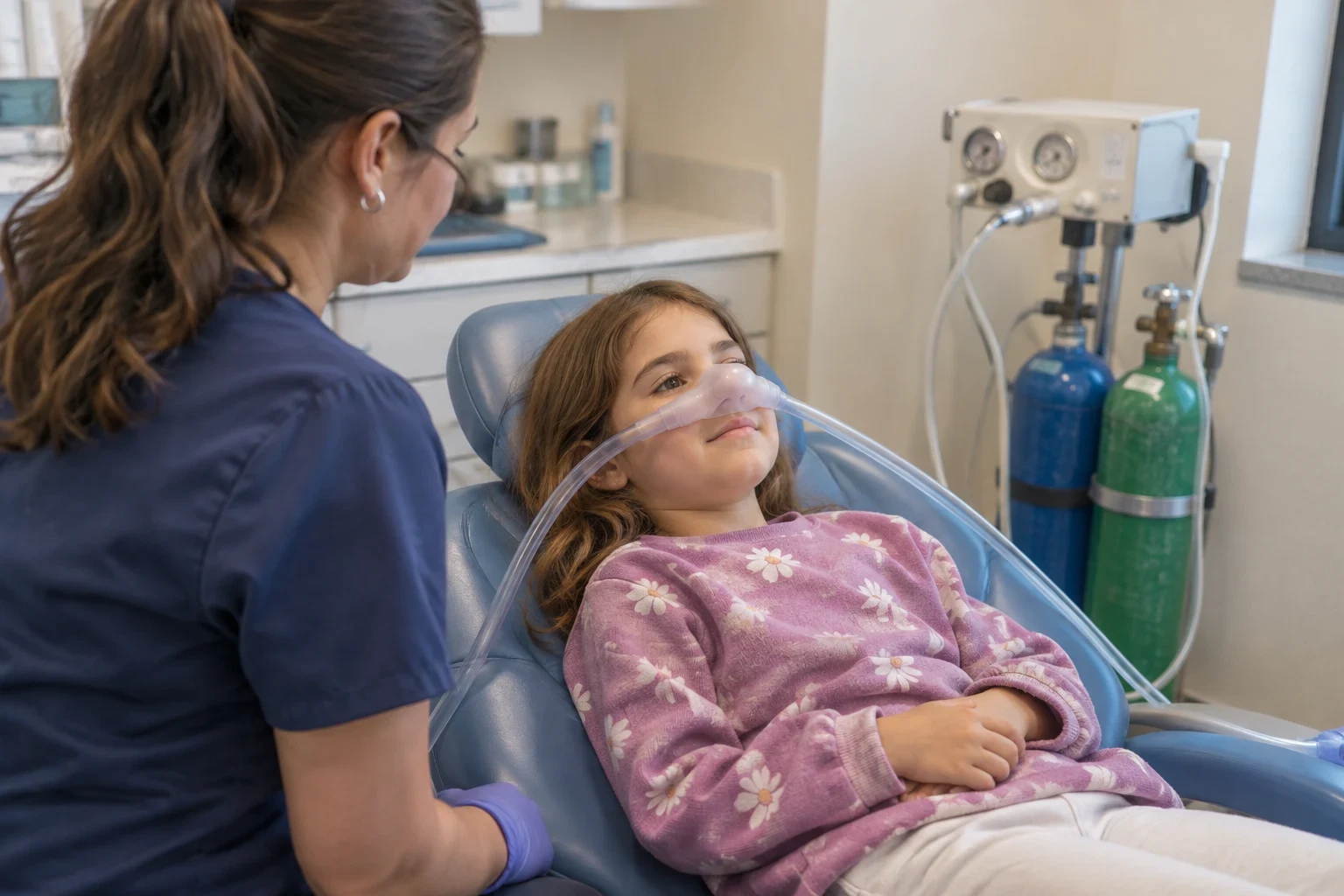
Nitrous oxide for mild anxiety
Often called laughing gas, nitrous oxide is breathed through a small scented nose mask. Your child stays awake and can answer us the whole time. Once the mask is removed and they breathe ordinary air for a few minutes, the effect fades.
Oral sedation for longer work
For children who need more help, a measured dose of liquid medication is given at our office. Dosing is based on your child's weight, and we never send sedating medicine to be given before arrival.
Watching vital signs throughout
A small clip sensor reads your child's oxygen level and pulse from start to finish. Alongside it, one team member keeps eyes on breathing, skin color and how your child reacts when we speak or touch their hand.
Recovery before discharge
Your child rests with you until they are awake, can sit up and respond normally. We go over aftercare with you in person before you head out.
Signs sedation may help your child
Fear that stops care
If past visits ended in tears before any work was done, a light sedative can make treatment possible without forcing it.
A strong gag reflex
Some kids gag at the mirror or an X-ray sensor. Relaxing the reflex makes the work safer and more comfortable.
Several teeth need treatment
When a child needs multiple fillings or crowns, finishing in one calm visit is often easier than four tense ones.
Very young with urgent decay
Toddlers cannot sit still for long, but deep cavities in baby teeth should not wait until they are older.
Sensory or special health needs
Bright lights, sounds and touch can overwhelm some kids. We plan the visit around what your child can tolerate.
How the sedation day runs
- 1
Consultation and plan
We examine your child, review health history and explain which level of sedation we suggest and why. You get time to ask questions before agreeing to anything.
- 2
Preparing the day before
You receive written instructions on when to stop food and drink, which regular medicines to give, and what to wear. Loose, comfortable clothing and a favorite blanket or toy help. Call us if your child gets a fever or a cough.
- 3
Treatment with eyes on your child
We confirm fasting and check vital signs before starting. Once your child is relaxed, we complete the planned work while one team member focuses only on monitoring.
- 4
Recovery and going home
Your child rests until they are alert and steady. Plan for a quiet afternoon, soft foods and an adult watching them closely for the rest of the day.
What affects the cost of sedation
Three things shape the price: the kind of sedation, how long your child needs it and the treatment done while they are relaxed. At the consultation we walk you through the plan and the expected fees, so you know the numbers before the day arrives. If anything changes once we begin, we tell you before going further.
- Type of sedation
- Nitrous oxide is usually the simplest option. Oral sedation involves medication, more preparation and a longer stretch of monitoring time.
- Length of the visit
- Treating several teeth in one sitting keeps your child sedated longer, and that time is reflected in the total.
- The dental work itself
- Fillings, crowns or extractions are billed on their own, apart from the sedation that supports them.
- Your insurance and payment
- Plans differ a great deal on sedation. Some cover it for young children or extensive treatment, and others leave it out, so we help you read what yours says. Most insurance plans are welcome here, and you can also pay by Visa, MasterCard or Discover, or spread the cost with the CareCredit Patient Payment Plan.
Questions parents ask about sedation
Something not covered here? (617) 766-0034
Is sedation safe for my child?
Sedation carries some risk, which is why we screen health history carefully and choose the lightest level that works. Your child is monitored the whole time, and we postpone if they are sick or have not followed the fasting instructions. We are happy to talk through any concern before you decide.
Will my child be asleep?
Usually not. With nitrous oxide, kids are awake and relaxed. With oral sedation, they may become drowsy and remember little, but they can still respond to us.
Can I stay with my child?
Parents are welcome while the sedation takes effect and during recovery. We will tell you at the consultation how the treatment part of the visit works for your child's plan.
Why does my child need to skip food and drink beforehand?
Sedation relaxes the reflexes that protect the airway, so a full stomach raises the risk of vomiting and breathing trouble. Keeping the stomach empty is one of the simplest safety steps we have. Stick to the cutoff times on your written instructions, and if your child has a snack or drink by accident, phone us before you leave so we can decide together whether to go ahead.
What should I expect once we leave?
Laughing gas clears quickly, and most children are back to themselves a few minutes after the mask comes off. Oral sedation lingers longer, so plan on a sleepy, wobbly and sometimes cranky child for several hours. Stay close, offer soft foods and plenty of fluids, and keep them off bikes, stairs and climbing toys until the next day.
Start with a calm conversation
Tell us about your child's past visits and what worries you. We will explain the options and plan a first visit at a pace that suits your child.