ServicesExtractions
Gentle Tooth Extractions for Kids in Boston
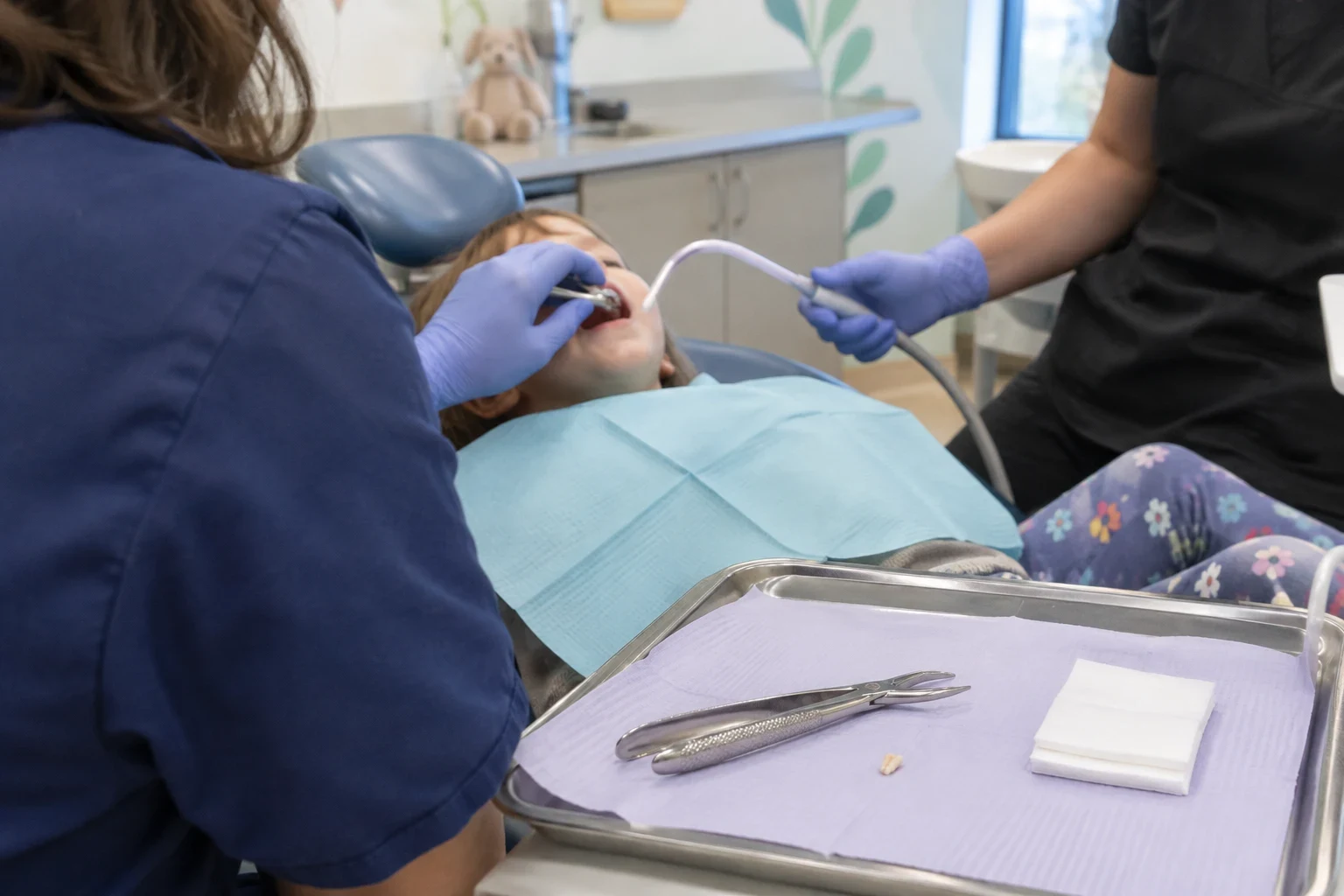
Some baby teeth stay stubbornly in place, and some teeth are too broken or infected to keep. In those cases we take the tooth out carefully, with thorough numbing, calm explanations for your child, written aftercare and a plan for the empty space.
When taking a tooth out makes sense
We always try to save a tooth first. Many damaged baby teeth can stay in place until their natural time with the right repair, whether that is a filling, a pediatric crown or root canal treatment sized for a child. That matters because baby teeth hold room for the permanent teeth forming underneath. Removal is our recommendation only when a repair would not hold up, or when the tooth is getting in the way of healthy development.
The usual reasons are decay that has reached far into the tooth, an abscess, a baby tooth that will not loosen while the adult tooth comes in behind it, a crack from a fall, or extra teeth crowding the bite. Some teens need a tooth removed as part of a plan from their orthodontist.
Before we suggest anything, we show you the X-rays and explain what we found. Then we decide with you whether watching, repairing or removing the tooth is the safest choice for your child.
What an extraction with us includes
A health history review
Before any numbing, we go over your child's medical history, allergies and current medications. This tells us which anesthetic is appropriate, how much suits your child's weight, and whether anything calls for extra care.
X-rays of the roots and the tooth beneath
We look at the roots and at the adult tooth developing underneath, so we can remove the baby tooth without disturbing what comes next.
Careful, weight-based numbing
A numbing gel goes on first, then local anesthetic given slowly. We wait until the area is fully numb and check with your child before we begin.
Comfort options
Many kids do well with numbing alone. For anxious children or more involved cases, we can talk through the options described on our Sedation Dentistry page.
Written aftercare
You leave with gauze, simple instructions about eating, bleeding and pain relief, and a reminder about the numb lip, which young kids sometimes chew without noticing.
A plan for the gap
If the tooth came out early, we check whether a space maintainer is needed to hold room for the adult tooth.
When a tooth may need to come out
An adult tooth crowding in behind
Permanent teeth sometimes erupt behind baby teeth that never loosened, usually along the lower front. When the baby tooth stays solid for several weeks, taking it out gives the adult tooth room to shift forward.
Swelling or a spot on the gums
A little raised bump near the tooth, a swollen cheek or a bad taste that keeps coming back can point to an infection at the root. Book an exam soon, even if your child says nothing hurts.
Damage from a fall
A tumble at the playground or during sports can split a tooth beneath the gums. Some of these can be fixed and some cannot, and an exam with X-rays shows us which.
Decay that keeps returning
If a tooth has been treated more than once and the decay now reaches toward the root, removing it may be the safer option.
A wiggly tooth that stays sore
Most loose teeth fall out without help. One that aches for days, dangles by a thread or makes chewing painful deserves an exam.
How the appointment goes
- 1
Exam and a clear recommendation
We examine the tooth, take any X-rays needed, and explain what we found in plain terms. If extraction is the right step, we tell you why and what the alternatives are.
- 2
Getting your child ready
We use simple, kid-friendly words for what will happen, without frightening details. Parents are welcome to stay close, and your child knows they can raise a hand for a pause at any point.
- 3
Numbing and removal
Once the area is fully numb, we gently loosen and lift the tooth. Most baby teeth come out in a few minutes, and your child feels pressure rather than pain.
- 4
Gauze, rest and going home
Your child bites on gauze while we confirm the bleeding is slowing. We go over aftercare with you before you leave, and you can phone us with any questions that come up that evening.
What shapes the cost of a tooth removal
No two extractions are priced quite the same, because the tooth, its roots and what sits around it all change the work involved. Once the exam is finished, we explain the details to you before anything starts. We accept MasterCard, Visa, Discover, most insurance plans and CareCredit Patient Payment Plan. If your coverage for this visit is unclear, we are glad to look at it with you.
- Simple or surgical removal
- A baby tooth that is already loose usually means a shorter visit. A permanent tooth, or one that has broken off near the gum line, can take longer and involve more steps.
- Imaging and the exam
- The X-rays we take to see the roots and the developing adult tooth underneath are part of what goes into the total.
- Sedation, when chosen
- A visit with numbing alone stays straightforward. Adding a sedation option for your child changes the scope of the appointment.
- Holding the space open
- When a space maintainer is recommended to keep the gap from closing, it is its own appliance, fitted at a separate visit.
Parents' questions about extractions
Something not covered here? (617) 766-0034
Will my child feel the tooth come out?
There should be no pain. Once the spot is numb, most kids say it feels like pushing or squeezing. We confirm the numbness before we begin, and we pause any time your child gives the signal.
Why not leave a baby tooth that will fall out anyway?
In some cases waiting really is best, and we will say so plainly. An infected baby tooth, however, can harm the permanent tooth developing under it, and a baby tooth that won't loosen can steer the adult tooth off course. We compare how much time the tooth has left with the risks of keeping it.
What can my child eat after the extraction?
For the rest of the day, choose soft foods served cool or lukewarm, like mashed potatoes, oatmeal, scrambled eggs or a smoothie eaten with a spoon. Avoid straws, hot drinks and crunchy snacks for the first day so the clot can form undisturbed. Your child can brush again the following day, staying gentle near the spot.
How do I keep my child from chewing the numb lip?
Feeling generally returns in a few hours. Watch younger kids closely, wait to serve food until the numbness fades, and keep them busy with something calm. A chewed lip can puff up and look worrying, so phone us if it happens.
Will the gap cause problems later?
That depends on which tooth was removed and how early. Losing a front baby tooth ahead of schedule seldom causes issues, but back molars save room for the permanent teeth. If the space looks likely to close, we will suggest a space maintainer and explain our reasoning.
Let's take a careful look at that tooth
Phone us and we will set your child up as a new patient and find a time for a first exam. At that visit we look at the tooth, show you what we see and decide on the next step with you. Families from across Boston and nearby towns such as Cambridge and Quincy see us for this care.