ServicesSealants
Children's Sealants in Boston
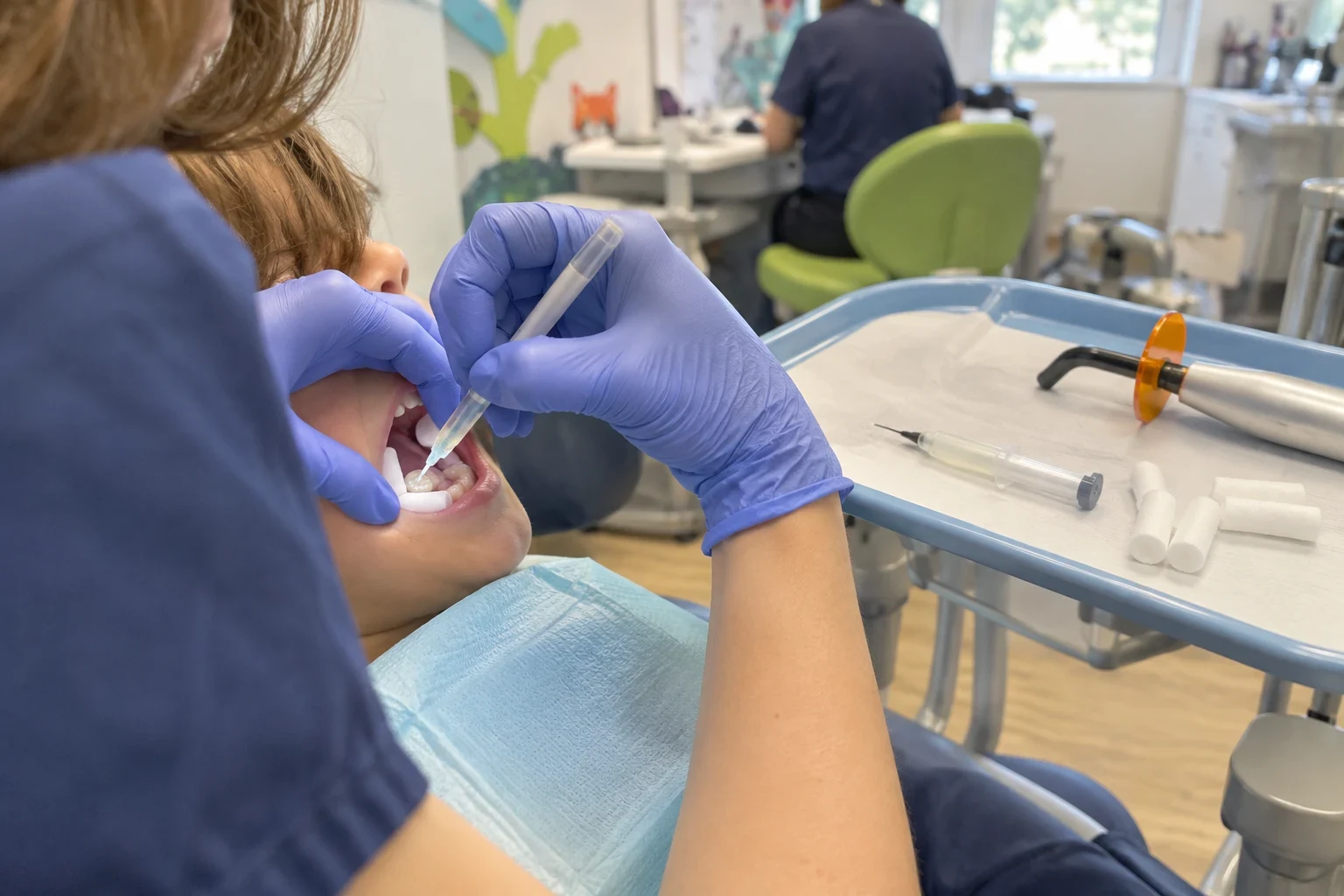
A sealant is a thin, tooth-colored layer brushed onto the biting surfaces of your child's back teeth. Nothing is drilled and no needle is used. It takes only minutes per tooth and seals off the deep grooves where most cavities in kids get their start.
How sealants protect your child's molars
Back teeth have tiny pits and fissures across their biting surfaces. Many are narrower than one bristle of a toothbrush, so plaque tucks in where even a careful brusher cannot reach. A sealant fills those channels, sets hard and leaves a smooth top that brushing can actually clean.
Timing usually follows the permanent molars. The first pair tends to appear around age six, and the next around age twelve, and we like to seal them soon after they come through. Baby molars can be sealed too when their grooves run deep or your child has had cavities before.
Parents from around Boston often choose this as an early visit for a younger child. It is gentle and quick, and it lets your child get comfortable in the chair long before any larger treatment might come up.
Every step of a sealant visit
Checking before we seal
We examine every groove first. A sealant only goes over healthy enamel or the very earliest changes, never on top of active decay that calls for a filling.
A clean surface
We polish the tooth so the sealant grips bare enamel instead of a film of plaque. It is a small step that makes a real difference to how long the sealant stays put.
A dry working area
Moisture is what most often loosens a new sealant too soon. Cotton rolls and gentle suction keep the tooth dry, and some kids get a small, soft cheek retractor so the material can set properly.
Applying and hardening
A mild gel conditions the enamel for a few seconds before we rinse it off. Then the sealant is brushed into the grooves and set with a blue curing light, with your child wearing protective glasses the whole time the light is on.
Checking the bite
Before you head out, we run an instrument over each sealed tooth and have your child bite down. Any spot that feels high gets smoothed right then.
Signs your child may be ready for sealants
- New back teeth have come in
- If you can see a new molar fully through the gum behind the baby teeth, it is usually ready. Fresh enamel is at its most vulnerable in the first couple of years.
- Deep grooves on the molars
- Some kids simply have deeper pits than others. If we notice staining or food packed into the grooves at a checkup, sealing them is often the sensible next step.
- Cavities in baby teeth
- A history of cavities tells us bacteria have had an easy time in your child's mouth. Sealing the permanent molars helps protect the teeth that need to last.
- Braces or a busy routine
- Kids with orthodontic appliances, frequent snacks or sports drinks have more trouble keeping back teeth clean. A sealant adds protection where brushing reaches least.
How the appointment runs
- 1
Talk it through
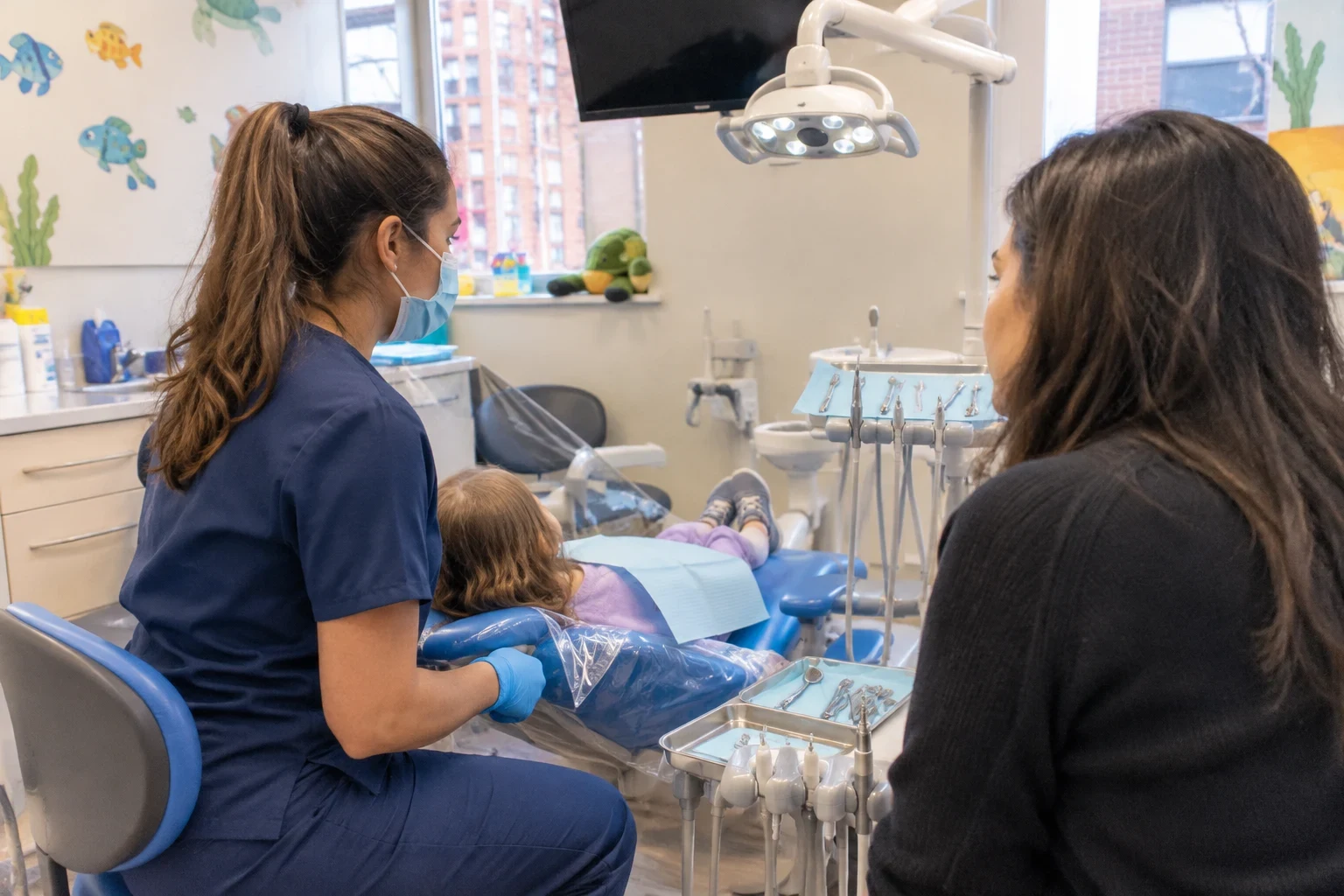
We explain each step to your child in plain words and let them see and touch the tools first, including the small light. You are welcome to stay close by.
- 2
Clean, condition and dry
We polish the tooth, apply the conditioning gel, rinse and dry. The gel has a sour taste for a moment, and we rinse it away well.
- 3
Seal and cure
The coating is painted into the grooves and hardened with the light, one tooth at a time. Most kids are surprised by how quick it is.
- 4
Check and go
We test the bond and the bite. Your child can eat and drink normally right away, with no numbness to wait out.
What shapes the price of a sealant visit
The total mostly comes down to two things: the number of teeth we seal and how your dental plan treats preventive care. We go over what applies to your child before any work begins, so the bill holds no surprises. For payment, you can use a Visa, MasterCard or Discover card, and we work with most insurance plans as well as the CareCredit Patient Payment Plan.
- Number of teeth sealed
- Sealants are charged per tooth. A typical first visit covers the four first permanent molars, and the second molars are usually sealed a few years later once they arrive.
- Your plan's coverage
- Many plans cover sealants on permanent molars up to a certain age, and some exclude baby teeth. If your plan's language is confusing, we can help you read it.
- Early decay found at the exam
- If we spot a small cavity already forming in a groove, a sealant is not the right choice for that tooth. It may need a filling first, or a filling instead, and we share the photos or findings with you before anything changes.
- Care in the years ahead
- Normal chewing wears sealants down over time, and an edge can occasionally chip. We check them at each exam and cleaning and touch up small worn spots when they need it.
Parent questions about sealants
- Are sealants safe for my child?
- Yes. Sealants have been used on children's teeth for decades and are a routine way to protect molars. Some parents ask about BPA. Any exposure from a sealant is very small and drops off within hours, and a thorough rinse right after placement reduces it even more. We are glad to talk through the materials we use.
- Will my child feel any pain?
- No. There is no drilling, no shot and no numbing. Most kids describe it as having their teeth painted. The only hard part is keeping the mouth open for a few minutes, so we stop for a break whenever your child asks.
- How long will sealants hold up?
- A well-placed sealant can stay on for years, and many last into the teen years. Chewing on hard things like ice cubes or hard candy tends to wear them down sooner. At each checkup we inspect them and touch up any areas that have thinned.
- Does my child still need to brush and get fluoride?
- Yes. A sealant protects only the chewing surface, and cavities can still form between teeth or along the gumline. Daily brushing and flossing, along with fluoride treatment at checkups, remain an important part of keeping teeth healthy.
- Do baby teeth ever get sealants?
- Sometimes. If baby molars have especially deep grooves or your child has already had cavities, sealing them can help keep those teeth healthy until they fall out naturally. We decide tooth by tooth during the exam.
Give the back teeth a head start
When permanent molars start showing behind the baby teeth, a short, quiet visit can save your child from a filling later on. Phone us to register as a new patient or book a sealant appointment.