ServicesFluoride Treatment
Fluoride Treatment in Boston
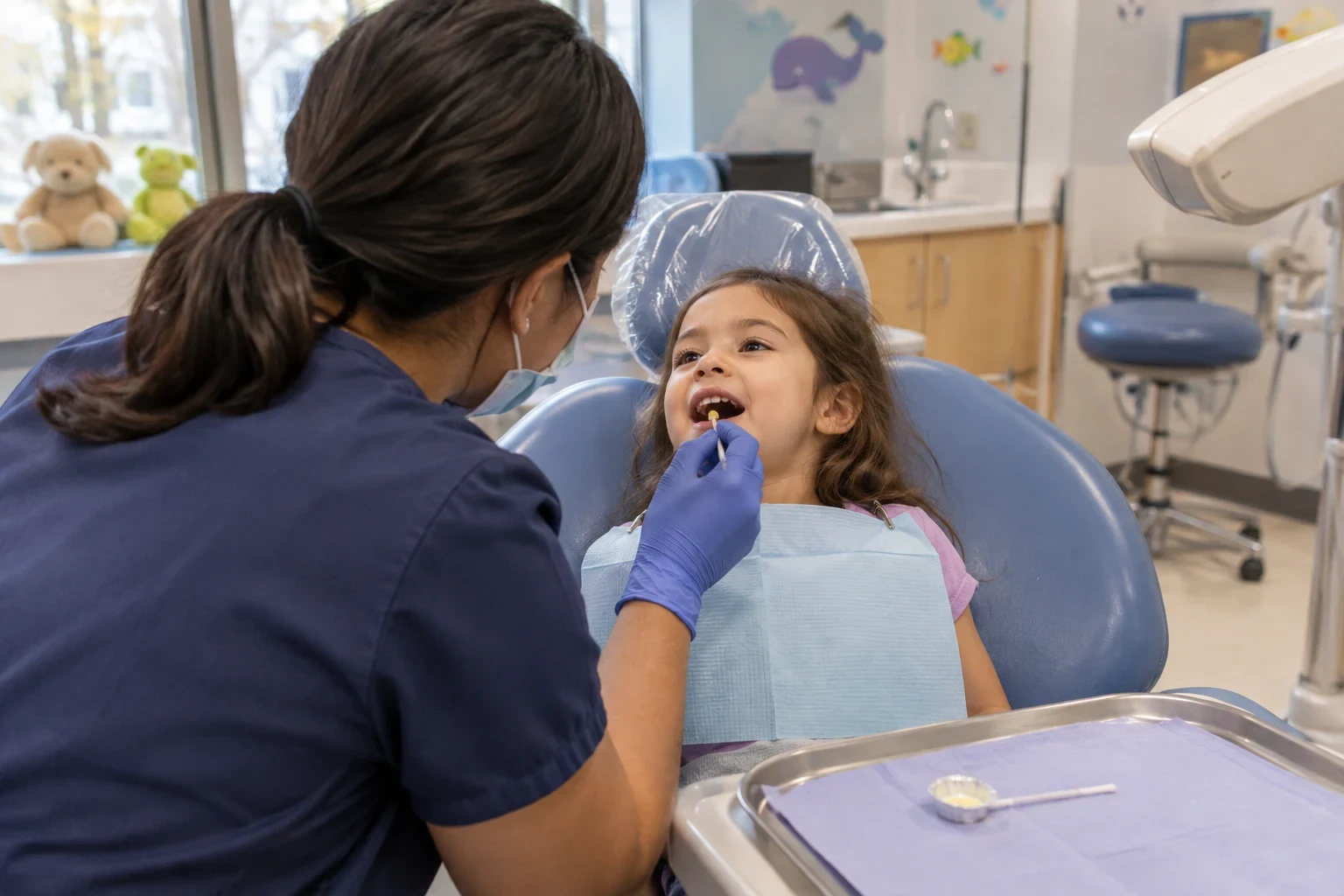
We brush a thin layer of fluoride varnish onto your child's teeth to help the enamel harden and resist decay. The dose is measured for age and size, it sets on contact with saliva, and kids can usually head straight back to their day.
A small, measured step that helps young teeth hold up
Fluoride helps enamel take back minerals lost to acids from food and bacteria. Baby teeth and newly erupted adult teeth have thinner, softer enamel, so they gain the most from it. A professional varnish delivers a concentrated amount right where it is needed and stays on the tooth surface for hours.
Safety guides how we use it. We choose a single-dose varnish, apply only what your child's teeth need, and keep the amount swallowed very small. Because varnish sticks to teeth instead of pooling in the mouth like the older foam trays, it suits toddlers who cannot yet spit reliably.
Most families pair it with a visit for exams and cleanings, so it adds almost no time to the appointment.
What a fluoride treatment with us includes
A quick look first
We check the teeth before applying anything. Early chalky white spots, existing fillings and any sensitive areas tell us where to focus.
Single-dose varnish
Each child gets a sealed, individual dose. Nothing is shared between patients, and the amount is suited to small mouths.
Dosing by age
A toddler with eight teeth needs far less than a teen with a full set. We ask about toothpaste and drinking water so the total fluoride your child gets stays in a sensible range.
Gentle, dry application
We dry each tooth with gauze and paint the varnish on with a soft brush. There is no tray, no rinse and nothing for your child to hold in the mouth.
Clear aftercare
You leave with simple instructions on eating, brushing and what the slight yellow tint means, so nothing about the rest of the day is a guess.
Signs your child could benefit from fluoride
Chalky white spots
Dull, pale patches along the gumline usually mean enamel has started losing minerals. Caught this early, the surface can still rebuild, and fluoride supports that repair.
Past cavities
A child who has already needed fillings still has the same habits and mouth bacteria. Regular varnish makes another cavity less likely.
Braces, sippy cups or frequent snacks
Anything that holds sugar or food against teeth for long periods raises the risk of decay. Brackets add tight corners that a toothbrush struggles to reach.
Newly erupted adult molars
Fresh molars have the softest enamel they will ever have. Fluoride pairs well with sealants on these back teeth.
Little fluoride in drinking water
Kids who mostly drink bottled, filtered or well water may get very little fluoride that way. We are glad to talk through what that means for your child.
How the visit goes
- 1
Start with clean enamel
Varnish bonds best to a clean surface, so it usually comes right after a cleaning. For babies and young toddlers, a gentle wipe of the teeth is often enough.
- 2
Coat a few teeth at a time
We blot a small group of teeth dry, then sweep the varnish across them with a soft brush before moving on. The whole step lasts a minute or two, and the mild flavor rarely bothers kids.
- 3
Let it set
Contact with saliva hardens the coating almost immediately. Your child can close their mouth and leave the chair without any waiting.
- 4
The rest of the day
Cool drinks and soft foods are fine straight away. Steer clear of hot, sticky or crunchy foods for a few hours, and leave brushing until the following morning.
What shapes the cost of fluoride
Fluoride varnish is usually a small line on the bill for a visit, and the cost tends to be modest. What changes it most is your coverage and how often your child needs an application. We go over both with you by phone before the appointment, so you know what to expect when you arrive.
- Your dental plan
- Many plans cover fluoride for children, but some cap it at a certain age or allow only a set number of applications a year. We take a wide range of plans and can help you make sense of what yours includes.
- How often your child needs it
- Kids with a low risk of cavities typically do well with varnish twice a year. A child with active decay or braces may benefit from shorter gaps between applications.
- What else happens that day
- Fluoride is often added to an exam, a cleaning or sealants. When it is, the total for the visit covers all of that care, not just the varnish.
- Ways to pay
- Visa, MasterCard and Discover cards are all welcome, along with most insurance plans. Families who prefer to spread out the cost can use the CareCredit Patient Payment Plan.
Fluoride questions from parents
Something not covered here? (617) 766-0034
Can a baby or toddler safely have fluoride varnish?
It can, as long as the amount is right. The coating goes on very thin and hardens within moments, so only a tiny amount is swallowed. That makes varnish the form we choose for little ones who have not learned to spit.
How young can my child be for a first application?
Varnish can start as soon as the first teeth come through. A first visit near the first birthday is a natural time to talk it over, and we will let you know whether your child is ready.
Why do the teeth look a little yellow after the visit?
Certain varnishes leave a light tint while the coating is in place. It comes away with the next morning's brushing and does not stain the enamel underneath.
Do we skip toothpaste on the day of treatment?
Hold off on brushing for the rest of that day so the coating can do its work. The next morning, return to your usual routine: a smear the size of a grain of rice for toddlers, and a pea-sized amount from around age three.
Is it possible to get too much fluoride?
Years of excess fluoride can leave faint white flecks on adult teeth that are still forming. We keep the in-office dose small and check what toothpaste and water your child uses, so the overall amount stays in a healthy range.
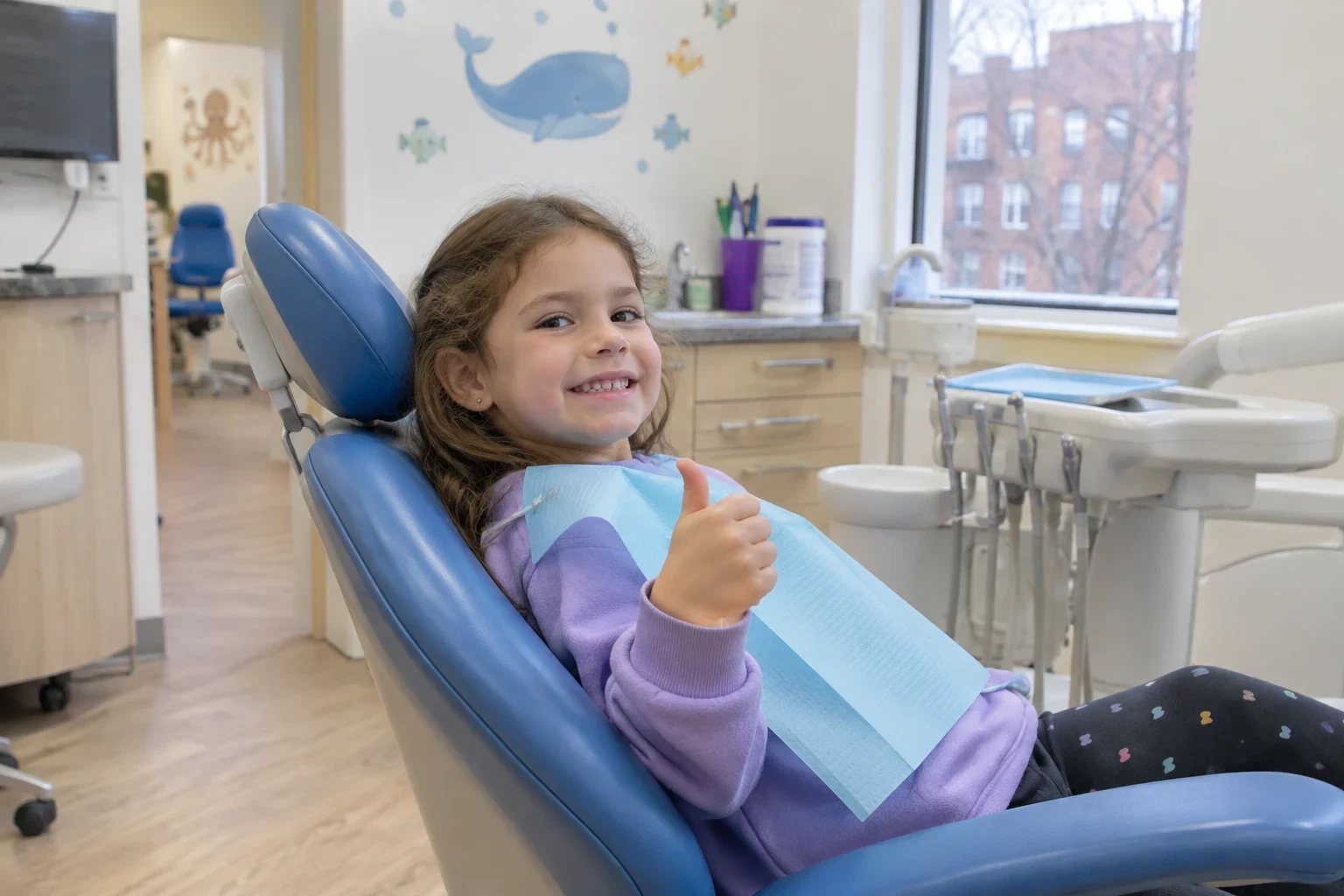
Add fluoride to your child's next checkup
Families come to us from Boston, Cambridge, Somerville and the towns around them. One phone call registers your child as a new patient and finds a time that suits your family.