ServicesRoot Canals
Children's Root Canals in Boston
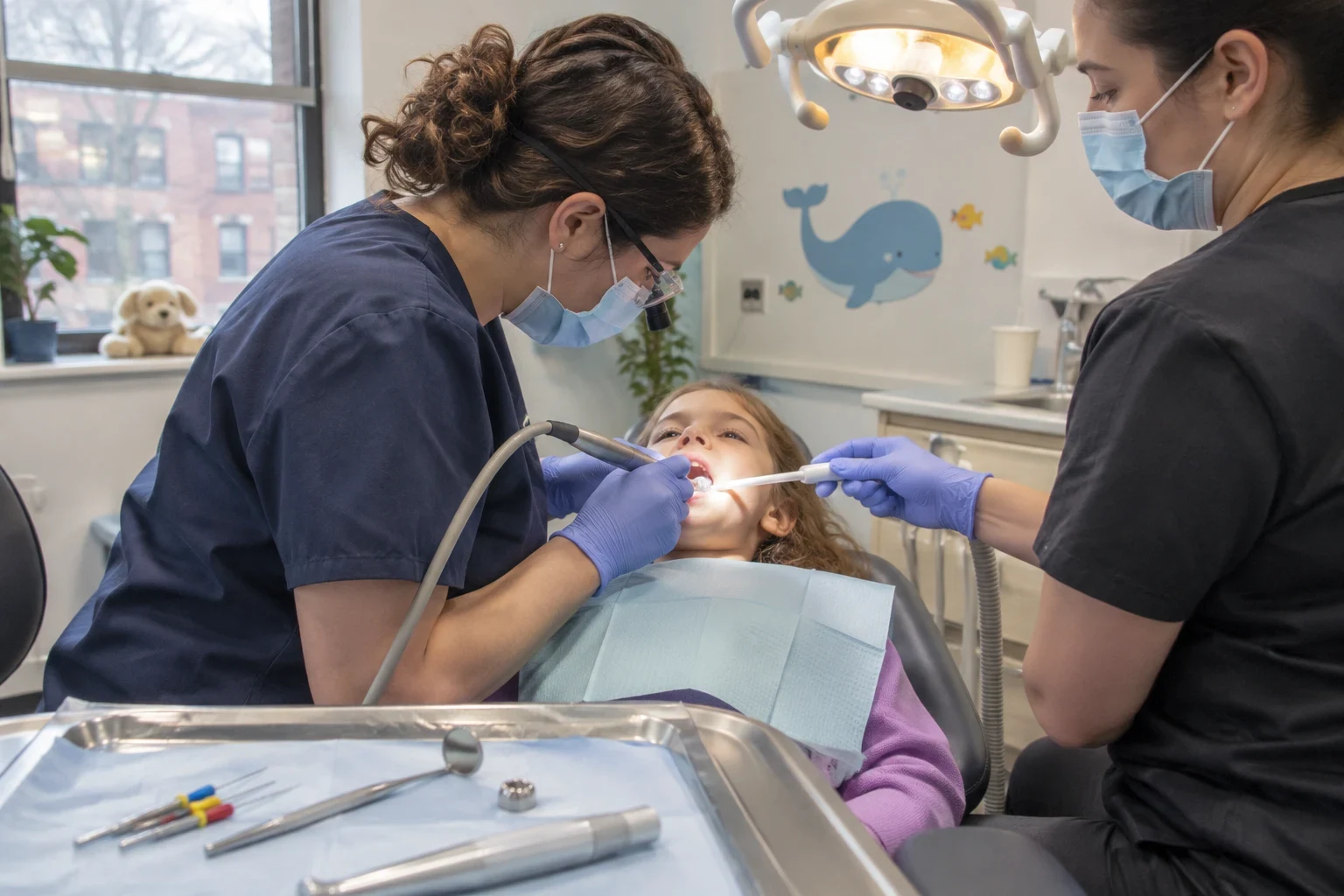
Once a cavity has worked its way into the soft center of a tooth, a pulp treatment can end the ache and let the tooth keep doing its job. We numb slowly, seal the tooth off from the rest of the mouth and walk you and your child through every step first.
When a child's tooth needs pulp treatment
Inside every tooth is the pulp, a soft core of nerves and blood vessels. Once decay travels deep enough to reach it, the pulp becomes inflamed or infected, and a filling alone will not settle it. With kids, the usual choice is a pulpotomy, which removes only the infected top portion of the pulp, or a pulpectomy, which also cleans the pulp out of the roots.
Many parents are surprised by how much a baby tooth matters. The back baby molars hold space for adult teeth until roughly ages 10 to 12, help with chewing and clear speech, and guide permanent teeth into position. Losing one early gives neighboring teeth room to drift and narrow the gap.
Our pace is careful and unhurried. We set the anesthetic dose from your child's health history and weight, keep the tooth isolated from the rest of the mouth for the whole procedure, and tell you plainly if taking the tooth out would be the safer path.
What the treatment includes
A focused exam and X-ray
We check the tooth and take a small digital X-ray with a protective thyroid collar on. The image tells us how far the decay has traveled and whether the bone near the root tips still looks healthy.
Weight-based numbing
Your child's weight sets the local anesthetic dose, and a topical gel goes on first so the injection is barely felt. We describe it to kids in friendly, simple words.
Rubber dam isolation
A thin, soft rubber sheet fits around the tooth like a raincoat. It stops rinses and tiny bits of tooth from reaching your child's throat and keeps saliva off the area we are treating.
Medicated pulp dressing
Once the infected pulp is out, we fill the space with a biocompatible material matched to the tooth. In baby teeth we use one that dissolves along with the root, so the adult tooth can come through on schedule.
A protective crown
A treated molar loses some strength, so we usually cover the whole tooth with a crown. Our Pediatric Crowns page describes the stainless steel and tooth-colored choices.
Signs a tooth may need pulp treatment
- An ache that breaks their sleep
- Pain that starts on its own, without biting down, or rouses your child during the night is a common sign the pulp is inflamed.
- Lingering sting from cold
- When a sip of cold water or a spoonful of ice cream leaves a sting that lasts well after swallowing, have the tooth checked.
- A small bump on the gum
- A pimple-like spot next to a tooth, sometimes with a bad taste, can be infection draining from the root.
- A tooth turning gray
- After a tumble, a front tooth that slowly darkens may have a damaged nerve, even if your child says it does not hurt.
- A visible, deep cavity
- Dark pits in the back molars that catch food are often nearer to the pulp than they look.
How the visit goes
- 1
Talk and check
We review your child's health history, answer your questions and show you the X-ray. You will know which treatment we recommend and why before anything starts.
- 2
Comfort and numbing
Your child settles in with a pillow and a show overhead if they like. We numb the area slowly and check that it is fully numb before working. If your child is very anxious, we can talk through the options on our Sedation Dentistry page.
- 3
Cleaning the tooth
With the rubber dam in place, we remove decay and the affected pulp, rinse the space and place the medicated filling. Most pulpotomies take well under an hour.
- 4
Crown and aftercare
We place the crown, often the same visit, and go over aftercare with you. Expect the lip and cheek to stay numb for a couple of hours, so soft foods and a watchful eye on lip biting help.
What moves the price of pulp treatment
Three things matter most: the tooth involved, how deep the infection reaches and what protects the tooth afterward. You will hear the expected charges from us before treatment starts, so nothing at checkout catches you off guard. We accept MasterCard, Visa, Discover, most insurance plans and CareCredit Patient Payment Plan.
- Pulpotomy or pulpectomy
- Treating only the crown portion of the pulp means shorter chair time and fewer materials than cleaning out each root canal.
- Primary or permanent tooth
- An adult tooth with roots still developing can need different materials, plus a few follow-up visits while we confirm the roots keep maturing.
- Type of crown
- Stainless steel and tooth-colored crowns are made from different materials, and coverage for each varies from plan to plan.
- Sedation for comfort
- For some kids, nitrous oxide or deeper sedation is what lets them rest calmly and hold still so the work stays safe. When that is needed, it is added to the visit.
Questions parents bring us about root canals
- Baby teeth fall out anyway. Is saving one worth it?
- The back baby molars usually hold on until a child is somewhere around 10 to 12. Lose one far ahead of that, and nearby teeth tend to drift into the open space, leaving too little room for the adult tooth waiting below. Treating the tooth keeps chewing comfortable and preserves that room without any appliance. If the tooth is already wobbly and nearly ready to come out, we will say so, and removal may be the sensible choice.
- Is this going to be painful for my child?
- Nothing begins until we have confirmed the tooth is fully numb, so most kids describe a pushing feeling rather than pain. Often the ache eases quickly, because the swollen pulp was the source of it. Some gum soreness for a day or two is expected, and an ordinary children's pain reliever generally handles it.
- How safe are the X-rays and materials you use?
- We take low-dose digital X-rays, and your child wears a thyroid collar for each one. The materials placed in the pulp space have been used in children's dentistry for many years and are selected to cooperate with the way baby tooth roots naturally break down. We are glad to explain any of them before we start.
- How do you decide when an extraction makes more sense?
- Taking the tooth out is often the safer path when infection has worn away too much of the surrounding bone, when the tooth is cracked beyond repair or when the adult tooth is close to arriving. Our Extractions page covers what that appointment looks like. We may also recommend a space maintainer to keep the gap ready for the permanent tooth.
- What can we do to prevent another deep cavity?
- Routine checkups catch decay early, while a simple filling can still fix it. Sealants and fluoride treatment add protection to the back teeth, where deep cavities most often start.
Bring that sore tooth in for a careful look
A quick exam and X-ray show us whether the pulp can be saved and which treatment will be gentlest for your child. We see kids from across Boston, plus Somerville, Newton and the surrounding area.