ServicesFillings
Children's Fillings in Boston
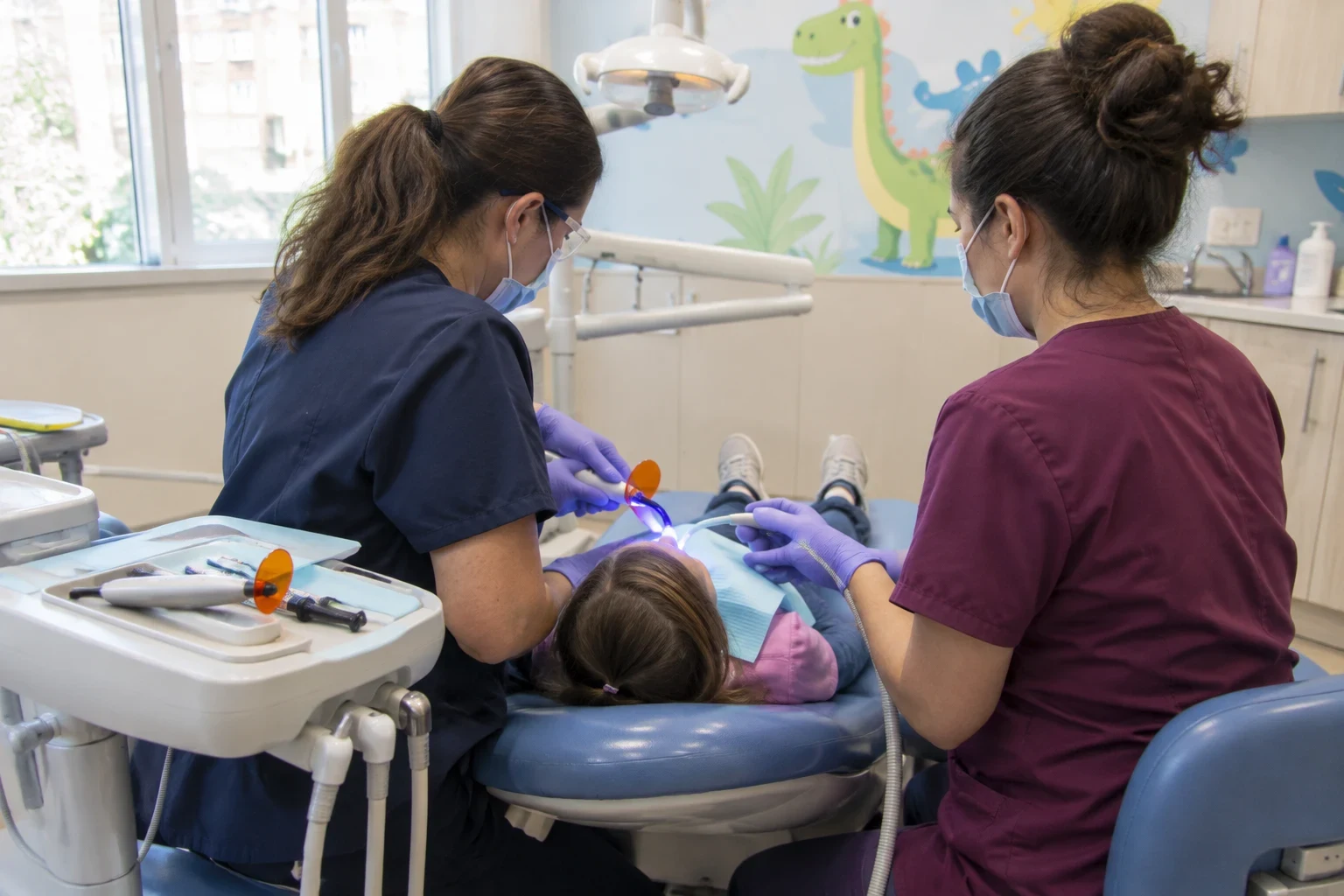
When decay is found early, treating it is quick and gentle. We remove the softened enamel, close the tooth with a tooth-colored filling and keep numbing and pacing matched to your child's size, so your child leaves with a sound tooth and a settled mood.
How a filling protects your child's tooth
A filling starts with clearing out the softened, decayed part of the tooth. We then seal the space with a durable material that blocks bacteria. Caught while the cavity is small, the tooth keeps working normally and the decay stops spreading.
Primary teeth do more work than they get credit for. They hold space open for the permanent teeth, help with chewing and with clear speech, and some remain until roughly age 11 or 12. Because their enamel is thinner than adult enamel, a cavity can reach the nerve faster. Treating it in time often means your child avoids a pediatric crown or a root canal down the road.
Safety shapes how we work. Anesthetic is measured to your child's weight, the tooth is isolated so water and debris stay away from the throat, and before each step we explain to your child, in plain words, what happens next.
What's included in a filling visit
A close look before any treatment
We check the tooth visually and, when needed, with low-dose digital X-rays taken with a protective apron and thyroid collar. You see the images and we show you exactly where the decay is.
Numbing sized for your child
A flavored gel goes on first so the injection is barely felt. The amount of local anesthetic is calculated from your child's weight, never a standard adult amount.
Isolation of the tooth
A small rubber shield or gentle isolation device keeps the tooth dry and stops bits of old tooth and water from slipping toward the throat. A dry tooth also helps the filling bond well and last.
Tooth-colored filling materials
We use composite resin, which is shaded to match the tooth, or glass ionomer, which releases a little fluoride over time and suits some baby teeth near the gumline. We tell you which one we recommend and why.
Bite check and polish
Before your child leaves the chair, we check the bite so nothing feels high, then smooth and polish the surface so it is comfortable to the tongue.
When a tooth may be telling you it needs a filling
- Dull white or brownish marks
- Early decay often appears as a flat, chalky patch near the gums. A brown or gray spot that brushing does not remove usually means the enamel has softened.
- Wincing at cold or sugary foods
- If ice cream, juice or cold water makes your child pull away, the cavity may be getting close to the inner layer of the tooth.
- Food catching in the same spot
- A cavity between two teeth often traps food. Your child might keep picking at one area or complain that something is always stuck there.
- Chewing on just one side
- Young kids rarely put tooth pain into words. Eating on one side only, slower meals or skipping crunchy snacks can be the only clue.
- Found during a routine visit
- Plenty of cavities cause no discomfort at all. The ones we find during exams and cleanings are usually the easiest to treat.
How the filling appointment goes
- 1
A short, honest preview
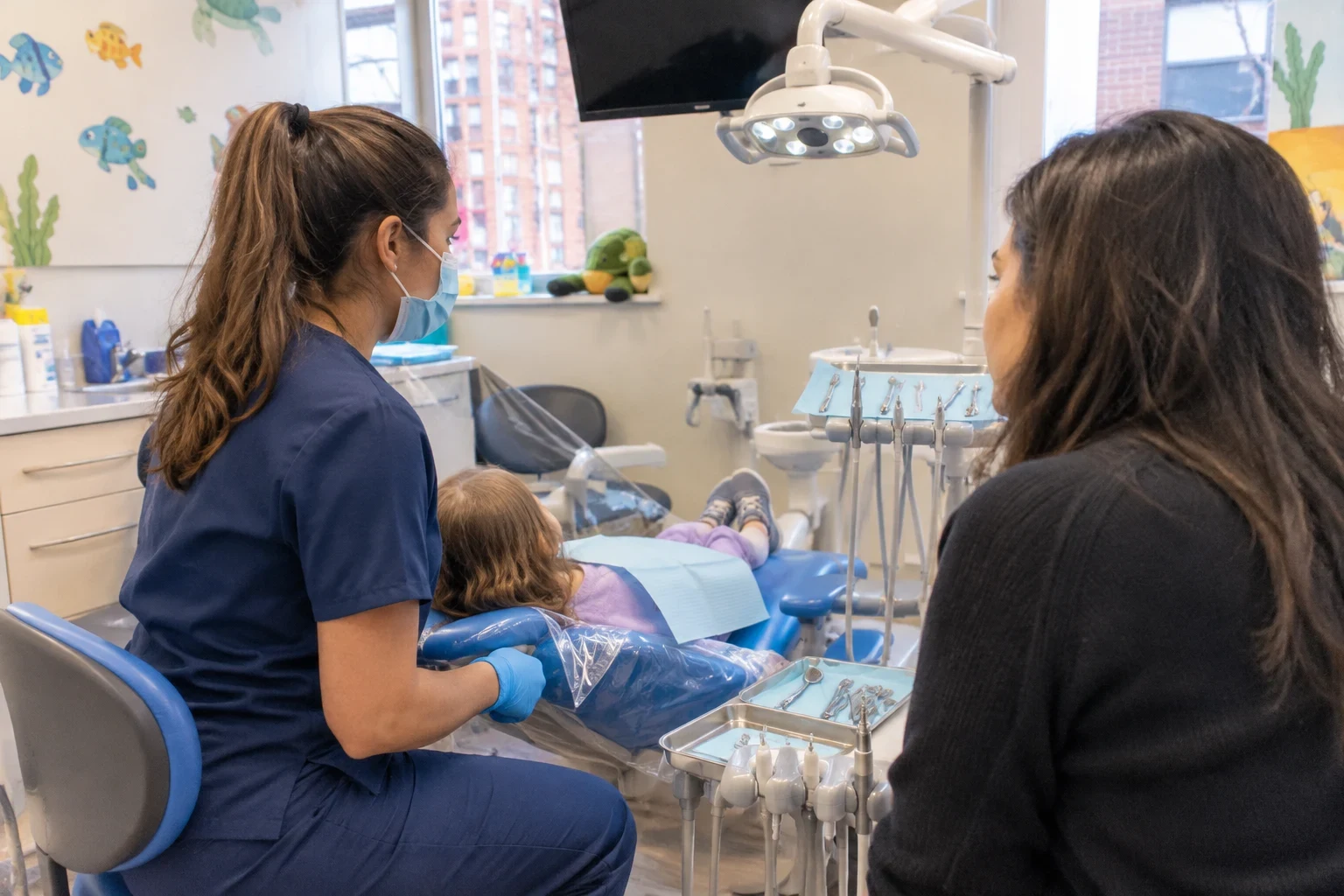
We show your child the tools, let them feel the air and water on a fingertip, and use simple words like sleepy juice and tooth vacuum. Parents are welcome to stay close.
- 2
Numbing and isolation
After the numbing gel and injection, we wait until the tooth is fully numb, then place the isolation shield. We check in with your child and pause whenever they need a break.
- 3
Removing decay and placing the filling
Only the decayed part is removed, keeping as much healthy tooth as possible. The filling material goes in layer by layer and is set with a curing light.
- 4
Aftercare you can follow
The lip and cheek stay numb for an hour or two. We walk you through keeping your child from biting the numb area and when soft foods are a good idea.
What goes into the fee for a filling
The fee depends on what your child's tooth actually needs, and we walk you through it before treatment begins. Payment can be made with Visa, MasterCard or Discover, and we work with most insurance plans as well as the CareCredit Patient Payment Plan. On the phone, we can talk through how coverage like yours tends to treat fillings.
- How much of the tooth is affected
- A cavity on a single surface is quicker to clean out and needs less material. Once decay wraps onto a second or third side of a molar, the appointment takes longer.
- The tooth's position
- Back molars in a small mouth are harder to reach and to keep dry than front teeth, which adds chair time.
- Which material fits the tooth
- Composite resin and glass ionomer carry different fees, and each is suited to certain teeth. We choose based on the tooth itself, not on which costs more.
- Extra comfort support
- Some children do best with nitrous oxide or another option from our sedation dentistry service. If that becomes part of the plan, it appears as its own line in the estimate.
Questions parents ask us about fillings
- Is it worth treating a cavity in a baby tooth?
- Yes, in most cases. Certain baby molars stay in place until around age 11 or 12. Left untreated, decay can reach the nerve, cause an infection and affect the permanent tooth forming underneath. Fixing it while it is small saves your child a more involved visit later.
- Will my child get a silver filling?
- No. We place tooth-colored materials, composite resin or glass ionomer. Both bond directly to the tooth, which lets us keep more of the healthy structure around the cavity. We explain which one suits your child's tooth and why.
- Does the numbing injection hurt?
- We first apply a flavored gel to quiet the gum, then give the injection slowly. Most kids describe a quick pinch, and many talk more about the flavor of the gel afterward than the shot itself.
- How much time should we plan for?
- After the tooth is numb, a single small filling usually takes under thirty minutes. If several teeth need work, we often split them across visits so younger children are not in the chair for too long.
- When can my child eat normally again?
- Wait on solid food until sensation returns, so your child does not bite a numb lip or cheek by accident. Composite sets fully before you leave the office, so ordinary meals are fine once the numbness wears off.

Treat the cavity while it is still small
A spot on a tooth or a wince at cold water is worth a careful look. We see children from across Boston, Cambridge, Somerville and the surrounding area.