ServicesPediatric Crowns
Pediatric Crowns in Boston
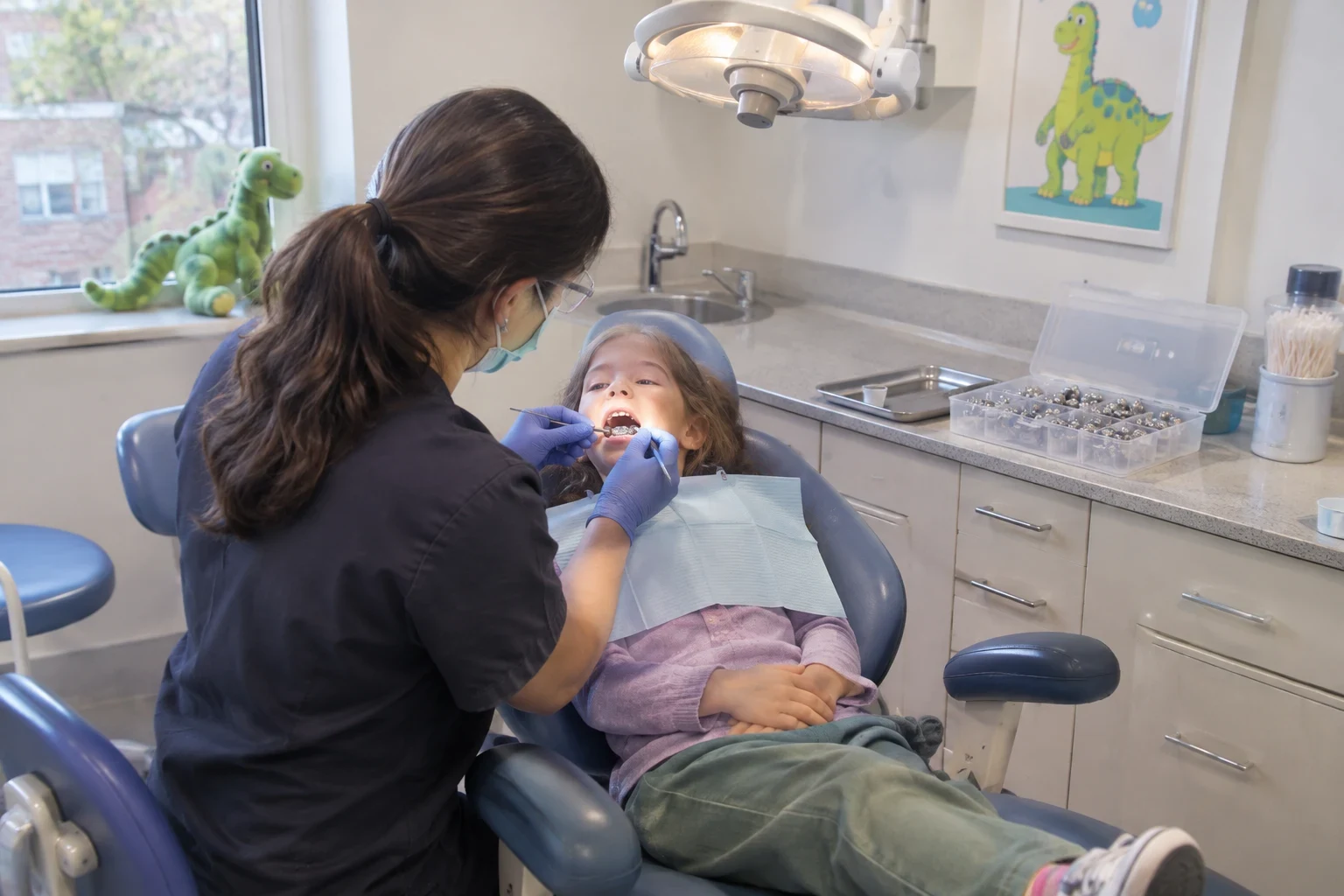
When a tooth is too broken down for a filling, a crown covers it completely so your child can chew, smile and sleep without trouble. We explain each material plainly, protect your child's airway during the work and keep the visit calm from start to finish.
Complete protection for a badly damaged tooth
A pediatric crown is a small cap shaped to cover an entire tooth. It keeps a weak tooth from breaking apart, closes off the surface to bacteria and lets your child go on chewing with that tooth until it loosens naturally. Many baby molars stay in place until age ten to twelve, so an injured one may still have years of chewing to do.
We tend to recommend a crown when decay has reached several sides of a tooth, after nerve treatment, or when enamel developed thin and chalky. An oversized filling in a small baby tooth is prone to cracking or leaking, and redoing it means extra numbing and extra time in the chair. Over the years, a crown is frequently the kinder option for your child.
Our work is planned around safety. We calculate numbing medicine from your child's weight, keep the tooth isolated so no debris travels toward the throat, and give you a plain list of what to watch for after the visit.
What your child's crown visit includes
A clear look before we decide
We examine the tooth and take only the x-rays we need, with a protective apron and collar in place. You see what we see, and we tell you whether a filling could still work.
Stainless steel crowns
Pre-formed steel crowns are the long-standing choice for back baby teeth. They are very durable, rarely need replacing and are fitted in a single visit.
Tooth-colored options
For front teeth or when appearance matters to your family, we discuss zirconia crowns and composite strip crowns. We walk through how each one wears, how it handles grinding and how it looks up close.
Isolation during the work
A soft rubber dam or similar barrier keeps the tooth dry and stops small fragments from being swallowed or breathed in. It also helps the crown seat and bond cleanly.
Pulp care when it is needed
If decay has reached the nerve, we treat it first so the crown sits over a healthy, settled tooth. Our Root Canals page explains how this works in children.
A smooth, checked finish
We trim and polish the crown edges, then check the bite so nothing feels high or scratches the cheek.
Signs a crown may be the right call
- A large cavity on a back tooth
- When decay spreads over two or more sides of a baby molar, there is often not enough sound tooth left to anchor a filling.
- Repeated repairs on one tooth
- Some teeth come back for a second or third filling, cracking or decaying again around the edges each time. Covering the whole tooth with a crown ends that pattern.
- A chipped or cracked tooth
- A tumble on the playground or biting something hard can split a weakened tooth. Full coverage protects what remains.
- Weak or chalky enamel
- Some kids are born with thin, soft or spotted enamel that wears quickly. Crowns guard those teeth against sensitivity and rapid decay.
- Dark or decayed front teeth
- Early childhood decay can leave front teeth brown or broken. A tooth-colored crown brings back the smile while the permanent teeth form.
How the day goes
- 1
Settling in
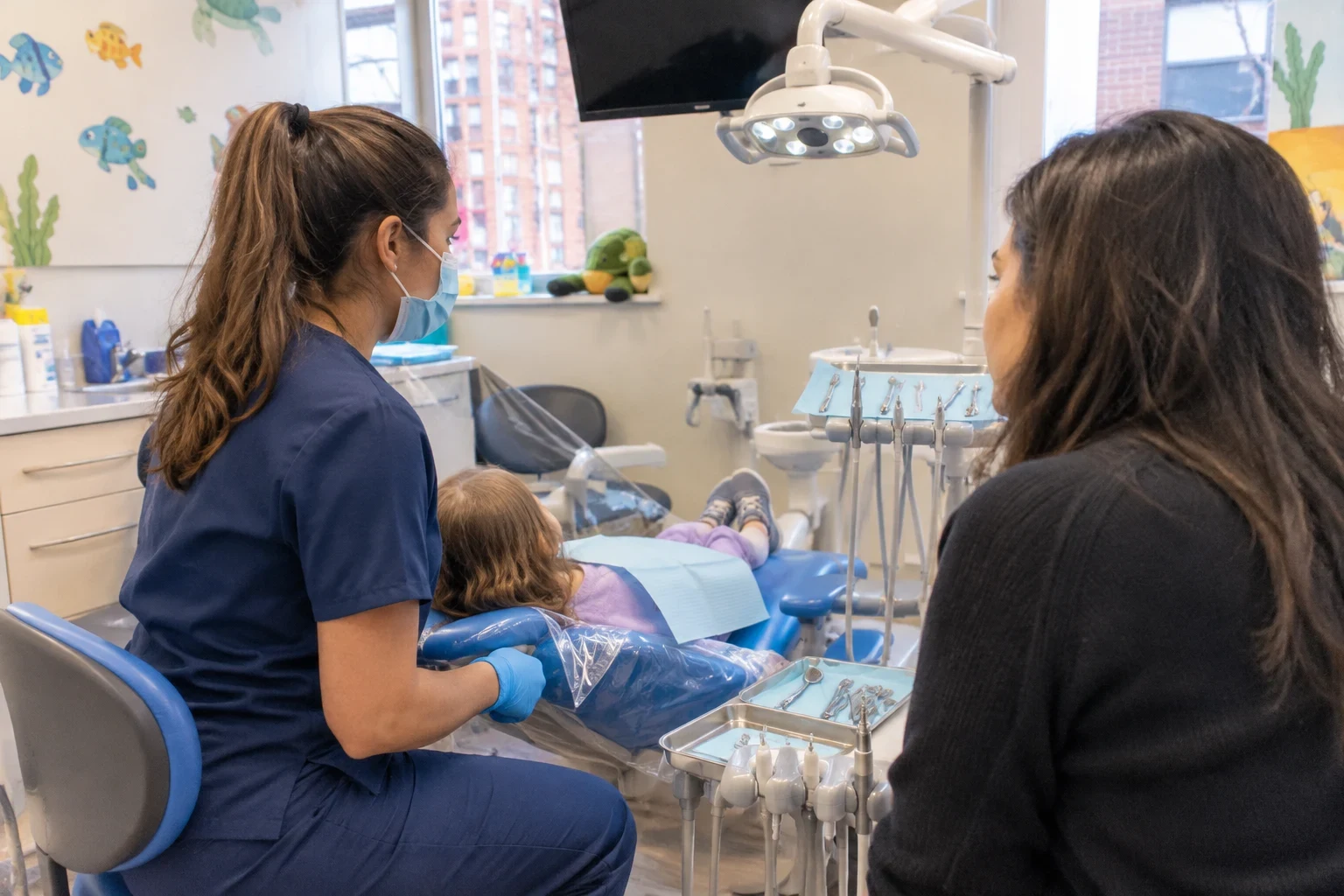
We greet your child, explain each step in kid-friendly words and let them see and touch the tools first. You are welcome to stay close by.
- 2
Comfort and numbing
We apply a numbing gel before a gentle local anesthetic, with the dose based on your child's weight. Nervous kids or longer visits may benefit from options on our Sedation Dentistry page, which we discuss with you in advance.
- 3
Shaping and fitting
With the tooth isolated, we remove the decay, shape the tooth slightly and size the crown. It is cemented in place, polished and checked against the opposite teeth.
- 4
Going home
Lips and cheeks stay numb for a few hours, so we ask you to watch that your child does not bite or chew on them. Soft foods are best until the feeling returns, and mild tenderness in the gums usually fades within a day or two.
What shapes the cost of a crown
Every child's mouth is different, so we discuss cost only once we have examined the tooth and reviewed the x-rays. You receive an itemized breakdown before any treatment begins. Families can pay with MasterCard, Visa or Discover. We also accept most insurance plans, and the CareCredit Patient Payment Plan is available if you would rather spread the cost out.
- Crown material
- Stainless steel is usually the most economical choice. Zirconia and strip crowns take more chair time and use more costly materials, and the fee reflects that.
- How many teeth
- Treating several teeth in one visit can mean fewer appointments, though each crown is still priced on its own.
- Nerve treatment first
- When the pulp needs care before the crown goes on, that step is billed separately and adds to the total.
- Comfort options
- Nitrous oxide or deeper sedation carries its own fee, which depends on what your child needs to stay relaxed and safe.
- Your insurance plan
- Plans often cover more of a steel crown on a baby tooth than a tooth-colored one. We help you read your benefits, but the plan decides what it will pay.
Questions parents ask about crowns
- Is it worth crowning a tooth my child is going to lose?
- Yes, in most cases. A baby tooth holds space for the adult tooth forming beneath it and helps your child chew and speak clearly. Back baby molars often stay until around age twelve. A badly decayed one left untreated can lead to pain, infection or early loss, and nearby teeth may shift into the gap and crowd the permanent teeth.
- Will the crown hurt my child?
- We numb the tooth fully before we begin, so most kids feel pressure rather than pain. The gums may be a little sore for a day or two afterward, and a children's pain reliever usually takes care of it. We review dosing with you before you leave.
- Steel or tooth-colored: which is better?
- Steel crowns are very tough and the usual choice for back teeth that handle heavy chewing. Tooth-colored crowns look natural and suit front teeth, but they need a very dry, controlled visit to bond well. We recommend what fits the tooth and your child, and we explain our reasoning.
- Does the crown stay behind when the baby tooth is ready to go?
- No. The cap is cemented to the tooth, so when the tooth loosens on its normal schedule, both come out as a single piece. The adult tooth underneath then erupts the way it would have anyway, with nothing extra for you to do.
- How do we care for a crowned tooth?
- Brush it twice a day and floss along its edges like any other tooth. Sticky candy and chewy treats can loosen a crown, so keep them occasional. We check it at every visit on our Exams & Cleanings schedule.
Talk with us about your child's tooth
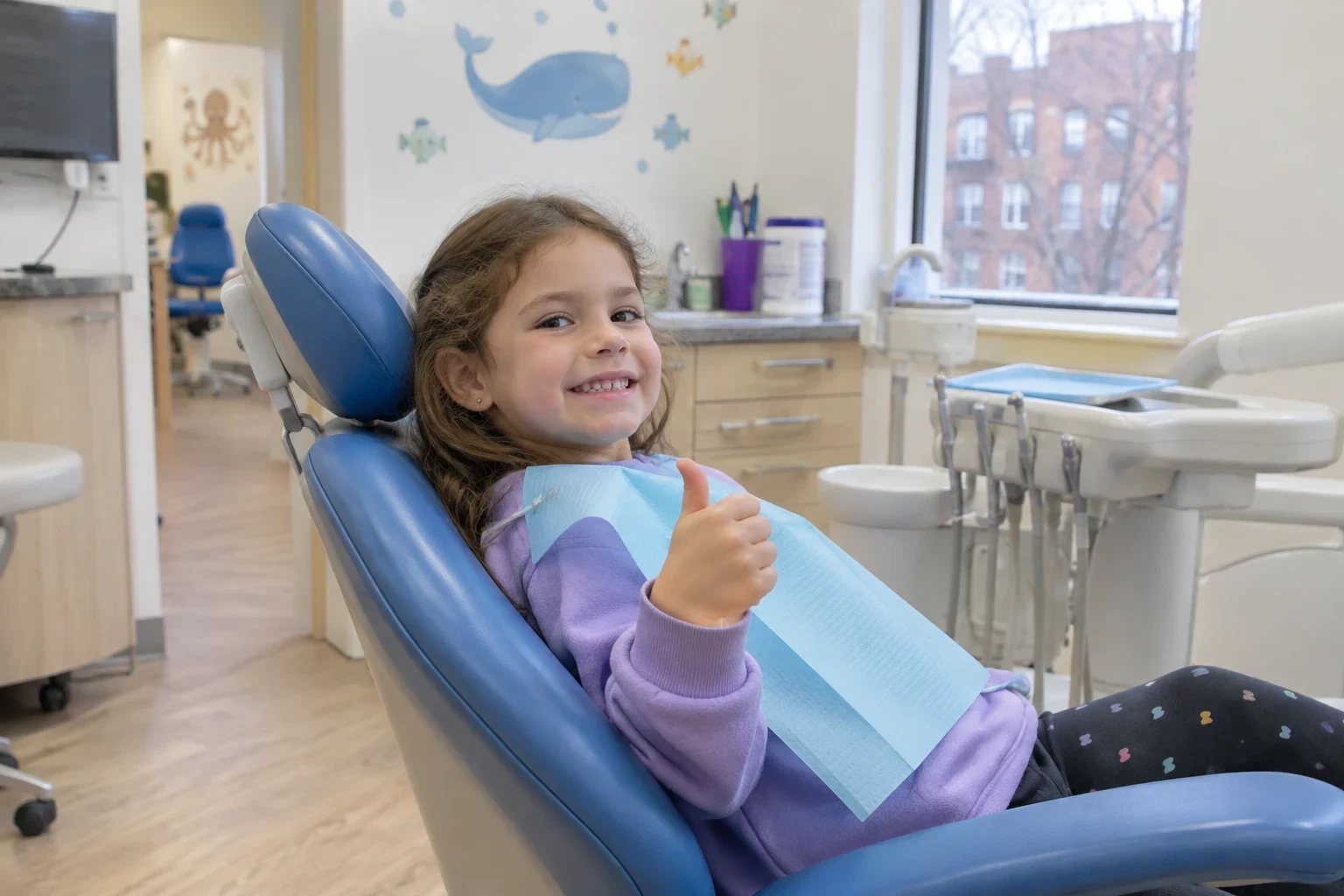
If a tooth looks broken, dark or keeps needing repair, we can take a careful look and walk you through the options. Families from Boston and nearby towns such as Cambridge and Quincy see us for this care.